TOP NEWS

Search

White-nose Syndrome could lead to the extinction of some species.

Lewisburg, PA (PRWEB) April 10, 2012Dr.
 DeeAnn Reeder, a professor at Bucknell University, is a leading expert on White-nose Syndrome
Quote start“This is like bringing small pox to the New World. It is surely an unprecedented wildlife disaster for North America.”
- Dr. DeeAnn Reeder, Bucknell UniversityQuote end

More than six million bats are dead, and millions more are expected to fall victim to a disease known as White-nose Syndrome, or WNS. First identified in the northeastern United States, WNS has wiped out an estimated 95% of Pennsylvania’s bat population and is quickly spreading across the country. It was most recently discovered in Missouri, Delaware and Alabama.
“This is like bringing small pox to the New World. It is surely an unprecedented wildlife disaster for North America,” said Bucknell University professor Dr. DeeAnn Reeder. Reeder is one of the country’s leading experts on WNS, and one of the researchers responsible for identifying the cause of the disease in 2011. “We can’t stop this thing. It’s marching across the country and we’re going to see some extinction.”
Reeder has been studying the disease since shortly after it was discovered in a New York cave in 2006. Since then it was been detected in at least 17 other states. Few bats exposed to the fungus that causes WNS survive.
“I was recently in a mine where I should’ve seen 10,000 or so bats. There were 150,” Reeder recalled. “We don’t know if the survivors have some immunity, or are lucky. If they’re just lucky, we’re in trouble.”
While Reeder and other scientists are turning their attention to surviving bats, and the clues they may provide in slowing the spread of WNS, the impact of the devastation to the country’s bat population could be severe. Reeder says for every one million bats that die, 692 tons of insects that would have been eaten by the bats, survive the summer months. That includes mosquitoes and agricultural pests. Recent studies show bats provide billions of dollars worth of agricultural and pest-killing services.

0

Dick Clark, host of ‘American Bandstand,’ dies at 82

By Becky Krystal, Published: April 18


Dick Clark, a television host and entrepreneur who sold rock-and-roll to Middle America on the dance show “American Bandstand” and counted down the new year with millions of TV viewers as emcee of an annual celebration in New York’s Times Square, died April 18 at a hospital in Santa Monica, Calif., after a heart attack. He was 82.The death was confirmed by his publicist, Paul Shefrin.
The seemingly ageless Mr. Clark, with his wholesome appearance and ever-present grin, was promoted as “America’s oldest teenager” and was among the most powerful arbiters of pop-music taste for 35 years.He was regarded as a man with an unerring sense of what Americans wanted to hear and see, and he achieved his greatest renown for an ability to connect with the tastes of the post-World War II baby-boom generation.
From 1952 to 1987, Mr. Clark hosted various incarnations of “American Bandstand,” first over the radio in Philadelphia and later on national television. The program was a sensation because of the prominent role it gave teenagers — who were always shown clean-cut in jackets, ties and sweaters — to vote on their favorite song.

Record industry executives paid attention to the young tastemakers, who were not always perfect in their judgment. The teens in 1963 had given the Beatles a thumbs down for “She Loves You” and their mop-top hairdos.
By the show’s 30th anniversary, almost 600,000 teenagers and 10,000 performers had appeared on the program. Among those to make early national appearances included Buddy Holly, James Brown, Ike and Tina Turner, and Simon and Garfunkel. Dance crazes such as the Twist and the Watusi could be traced to the “Bandstand” studio.

“Dick Clark was significant in transforming the record business into an international industry,” read the citation in 1993 when he was inducted into the Rock and Roll Hall of Fame. The citation went on to say that “his weekly televised record hops — which predated MTV by 25 years — played an integral role in establishing rock-and-roll, keeping it alive and shaping its future.”
Although the citation called him affable and magnetic, critics were less kind. Washington Post TV writer Lawrence Laurent called him a bland mediocrity, adding that Mr. Clark “was final proof that one need not be handicapped by performing talent to succeed in television.”

After “American Bandstand” ended its run on ABC in 1987, Mr. Clark took it into syndication for two years and then handed it over to a new host, David Hirsch. It went off the air shortly thereafter. Despite his prominence on camera, Mr. Clark said the vast majority of his work was done behind the scenes as a producer. His self-titled production company was a force behind a slew of made-for-TV movies, beauty pageants, game shows and awards shows, including the American Music Awards and the Daytime Emmy and Golden Globe awards ceremonies. The private equity fund of Washington Redskins owner Daniel M. Snyder acquired Dick Clark Productions in 2007 for $175 million.

Dick Clark Productions provided ABC with the “New Year’s Rockin’ Eve” TV spectacular every year since 1972. Mr. Clark had initially pitched the show as a hipper alternative to the long-standing broadcast tradition of airing Guy Lombardo’s big band playing “Auld Lang Syne” from New York’s Waldorf Astoria hotel. Mr. Clark drew in audiences that inaugural year with performances by Three Dog Night, Helen Reddy, Al Green, and Blood, Sweat and Tears.
0

WikiLeaks founder Assange to make debut as talk show host


April 17, 2012|By the CNN Wire Staff
WikiLeaks founder Julian Assange's talk show, "The World Tomorrow," is expected to make its debut Tuesday on a state-funded Russian television network.
Assange and RT, an English-language international satellite news channel, have not released the guest lineup in advance, but have hinted that the first interview would be controversial. WikiLeaks has asked followers on Twitter if they can guess who the first guest on the show will be.
Assange will present the show from the country estate in Britain where he is under house arrest while fighting extradition to Sweden. He will interview the show's guests either via satellite feed or in person.
"Being under house arrest for so long, it's nice to have an occasional visitor and to learn more about the world," he said in a preview for the show posted on RT's website.
He said that the experience of interviewing guests -- described by RT as opinion formers, some of them dissidents -- while under house arrest brings a different dimension to the process.
The talk show has created a stir in global media circles.
Commentators outside Russia have questioned the apparent link the show creates between Assange and the Kremlin, given RT's government-funded status.
But Assange said in the preview that that kind of criticism was "trivial" and insisted he had "complete editorial control."
He said the "obvious" reaction from his critics would be to say, "There's Julian Assange -- an enemy combatant, a traitor -- getting into bed with the Kremlin and interviewing terrible radicals from around the world."
Britain's Supreme Court is weighing whether Assange should be sent to Sweden to face allegations of rape and sexual assault lodged by two women in the country.
Assange has repeatedly denied any wrongdoing.
"RT is rallying a global audience of open-minded people who question what they see in mainstream media and we are proud to premiere Julian Assange's new project," RT Editor-in-Chief Margarita Simonyan said in a statement on the television network's website.
"We provided Julian a platform to reach the world and gave him total editorial freedom. He is absolutely the right person to bring alternative opinions to our viewers around the globe."
"The World Tomorrow" will be broadcast [simultaneously] on three RT channels, in English, Arabic and Spanish.
The WikiLeaks website for "The World Tomorrow" says there will be 12 shows in total, each featuring a 26-minute edited interview.
A financial blockade imposed by U.S. banks on WikiLeaks, which facilitates the anonymous leaking of secret information, has been running for about 500 days.
This week also marks 500 days since the allegations of sexual assault were first made against Assange, WikiLeaks says.
WikiLeaks gained global fame in 2010 with the Iraq and Afghanistan war leaks, and then followed up by leaking nearly a quarter million State Department cables.
In February this year, it began releasing 5 million e-mails it said belonged to Stratfor, a Texas-based private company that produces intelligence reports for clients.
0

9 year old boy’s cardboard arcade: The Power Of A Child's Imagination


Caine Monroy is a 9-year old boy who spent his summer vacation building an elaborate DIY cardboard arcade in his dad’s used auto parts store.
Caine dreamed of the day he would have lots of customers visit his arcade, and he spent months preparing everything, perfecting the game design, making displays for the prizes, designing elaborate security systems, and hand labeling paper-lunch-gift-bags. However, his dad’s autoparts store (located in an industrial part of East LA) gets almost zero foot traffic, so Caine’s chances of getting a customer were very small, and the few walk in customers that came through were always in too much of a hurry to get their auto part to play Caine’s Arcade. But Caine never gave up.

One day, by chance, I walked into Smart Parts Auto looking for a used door handle for my ’96 Corolla. What I found was an elaborate handmade cardboard arcade manned by a young boy who asked if I would like to play. I asked Caine how it worked and he told me that for $1 I could get two turns, or for $2 I could get a Fun Pass with 500 turns. I got the Fun Pass.

A roughcut of the film premiered at DIY Days, where Caine set up his arcade for people to play. Caine was commissioned by an attendee to build a custom cardboard claw machine, which he did for $80.

This film is a collaboration between all of my friends who chipped in, as well as all of the folks online who got behind the idea of helping to make Caine’s day. Big THANKS to everyone who helped! See FILM CREDITS

After the flashmob, at the end of the day as Caine and his dad drove home, Caine turned to his dad and said, “Dad, this was the best day of my whole life.”

If you like the film, please share it with a friend, and leave Caine a message on his Facebook page. If you are in the LA area, come on down and play Caine’s Arcade hours/directions) – Caine loves customers!
0

Okla. Drug Agents Arrest 73-Year-Old Woman

Oklahoma drug agents have arrested a 73-year-old woman for allegedly running a major marijuana operation.
 Click Like For Thrcenter News Updates: 
They say Darlene Mayes ran the drug trade from her Craig County home. Agents raided the home Monday and say they found six pounds of marijuana, guns and $277,000 in cash.
"We kept finding more cash and it was so surprising," said Vinta police chief Bobby Floyd. "It was surprising that it was just laying around. I mean it was in closets, underneath the bed. But it wasn't really hidden."
The task force says they had been investigating a drug ring for five months. Mayes had no prior criminal history.

Read more: http://www.koco.com/news/30872503/detail.html#ixzz1rxhUW7eV
0

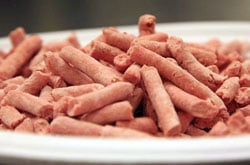
"Lean finely textured beef," aka "pink slime,"


"Lean finely textured beef," aka "pink slime," sparked an uproar when the USDA bought 7 million pounds of the stuff for school lunches. The agency maintains it's safe and healthy; critics say it's not fit to eat. But the burger filler isn't new, nor is it the only way that meat packers maximize production. Here's how it stacks up against two other mechanical processes.
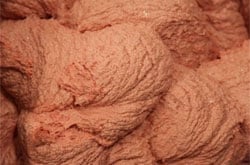
Lean Finely Textured BeefMechanically Separated MeatAdvanced Meat Recovery
WHAT DOES IT LOOK LIKE?pink slime
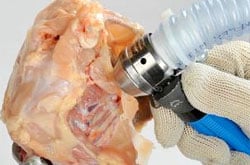
mechanically separated chicken
advanced meat recovery
WHAT ELSE IS IT CALLED?
"Pink slime," coined by formerUSDA microbiologist Gerald Zirnstein in 2002.
"White slime," in the popular press.
WHAT IS IT?
Processed beef trimmings and recovered materials from meat carcasses, like fat and connective tissue.
"paste-like and batter-like meat product" made from mechanically removing meat from animal bones.
Pieces of meat that have been scraped, shaved, or pressed off the bone by special machinery.
HOW IS IT MADE?
Trimmings are heated to 100°F and spun inside a centrifuge to separate the meat from the fat. After the fat is removed, the remaining beef bits are treated with ammonia hydroxide to kill bacteria such as E. coli or salmonella. They are then ground up, frozen into blocks and added to other beef products.
Carcasses are forced through "a sieve or similar device under high pressure to separate bone from the edible tissue." The remaining fragments (the USDA limits how many bits of bone are acceptable) are ground up into a paste and added to other processed meats.
Without grinding, crushing or pulverizing the bone itself, a machine removes edible tissue from beef and pork bones. If the resulting bits have more than 150 mg of calcium per 100 grams (indicating the presence of bones) they must be labeled "mechanically separated" meat.
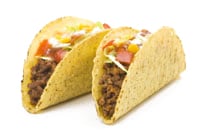
WHERE IS IT FOUND?burgermeatloafburgersmeatloafbolognapink slimebolognahot dogstaco fillingmeatballstaco fillingmeatballs
HOW IS IT LABELED?
Some companies may soon include "lean finely textured beef" on their product labels, and Congress recently introduced a bill to require labeling. Right now the USDA does not require any disclosure, because the product is considered the same as beef.
Manufacturers must always label "mechanically separated" pork, chicken or turkey on the ingredients list. According to the American Meat Institute, the product is no longer typically used in chicken nuggets (McDonald's has repeatedly claimed that its chicken nuggets only contain chicken breast meat).
Is labeled the same way as any other meat – such as "beef" or "ground pork."
HEALTH CONCERNS?
Trimmings are typically collected from more bacteria-prone parts of the cow, but treatment with ammonia is supposed to kill pathogens. In 2009 some beef products tested positive for E. coli and salmonella, but the USDA says it has modified inspection processes since then to address safety concerns. The USDA continues to "affirm the safety of Lean Finely Textured Beef product for all consumers."

0